Thursday, 26 January 2012

NewUSB


      As part of my girlfriend's course at University, studying Journalism, she was required a few months ago to complete a News Piece - compiling video clips into a two minute feature. The catch however was that she had to find her own story, nothing that had previously been covered or printed! 

     As a result of her internet research, she came across an online radio station, NewUSB, which prides itself on only airing music from un-signed bands from all over the world. My girlfriend found that this would be a fantastic feature to do, seeing as she could also potentially tie it in with one of her friend's bands, The Articles, and form her video feature. 

     Upon interviewing the owner of NewUSB, Raymond Rowe, she discovered that he has many bands who send him music from all over the world! On hearing that I was a linguist studying at the University of Salford, and also that I did pieces of translation, he explained that he had many bands in France and Germany. Since then, the relationship between us and the station has grown, in such a way that they would like us to do further things with them! So stay tuned with the blog to hear updates about that!
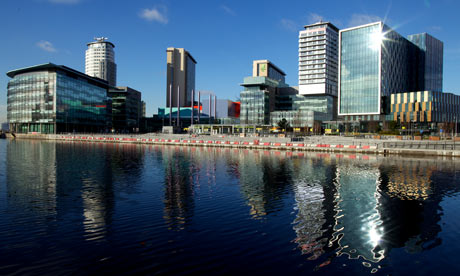
    However, more importantly I really must stress that firstly, my girlfriend also publishes a blog on Blogspot, as part of her effort to become a freelance journalist, whilst both working and studying at MediaCity UK. There are some really interesting pieces on there, really worth a look at:  http://newsreviewsbrews.blogspot.com/ or on Twitter @lornakellett .
   

 Secondly, the radio station NewUSB is simply amazing, their efforts for un-signed bands in unparalleled - please take a moment to check out their site and listen to their fantastic show at: http://www.newusb.co.uk/ or on Facebook and Twitter

   
 Finally, as above mentioned, there are an un-signed band out there who really are deserving of so much support - really amazing music, playing in many venues... Visit The Articles either on Twitter or MySpace...


To think about...

      
     On reading an article on a blog recently, I came across a point which interested me. Take the scenario for example that a gentleman goes into a shop and says ''I will give you £2.50 for these socks''. The price of the socks originally is £3.50. Evidently the gentleman does not purchase these socks at £2.50 and consequently pays the full price. 

     The blogger's point concerning this example was that; ''why should translators have to work within a business where on portals for translation work, the price for this work is offered to them by potential clients?''
    
    Surely then, similar to other trades it should be the Translator who proposes a price at which they will work, as opposed to a price being offered to them by the client?? 

     I was very much interested by this point as by speaking to translators who I've met, some my University Lecturers, I've heard that the pressures of finding work within the field results in this being the situation that Translators are left in - considering the recession for example - having to accept the terms set to them by their potential clients. 

Another translation...


Just a little update on a piece of translation given to me to do:

        
 Just received an email from a lady asking me to look over a letter from a French estate agent concerning certain aspects of a property. She required me to just give her the gist of this correspondence - much easier than a thorough word-for-word translation! Two translations in two days; at least I'm keeping busy in my week off from University !!

Wednesday, 25 January 2012

Little Update...


         Just been called by one of the clients I do some translations for - they're a Classic Formula One racing team currently in negotiations with a French client concerning some particular parts for one particular model... This particular client of mine - whose French is limited - has suddenly after weeks of correspondence in English been bombarded with a French email - that's where I step in! 

One such phrase was - 'ils sont un peu pinailleurs!' Rarely see that!


Tuesday, 24 January 2012

Just one of my translations...


 To all my visitors, please find below an example of my work... For the linguists among you I sincerely hope it impresses...


Firstly, the source text: 

 La Belle Vie à Londres?

La plupart des expatriés français résident dans la capitale, où tout semble possible.  Mais le logement peut coûter très cher.
Ici, à Londres, les Français sont partout.  Dans les restaurants, les boîtes de nuit, mais aussi dans les banques et les compagnies d’assurances, sans oublier les équipes de football et même l’industrie du cinéma!
Amélie Walker, la quarantaine dynamique, connaît Londres comme sa poche.  Cette femme douée et travailleuse est chef de service dans une entreprise de banlieue.  « Il y a quelques années les Français étaient rares parce qu’ils ne parlaient pas la langue, mais aujourd’hui ils sont beaucoup plus nombreux.»
Londres a complètement changé au cours des quinze dernières années.  Sur les 400 000 Français installés en Grande-Bretagne, plus de 200 000 vivent dans la capitale.  Parmi eux il y a beaucoup d’expatriés dont l’entreprise paie le logement.  Mais les jeunes, diplômés ou simples chômeurs, arrivent en grand nombre, normalement pour une période assez courte (entre quatre mois et deux ans).  Ils viennent surtout pour les petits boulots qui sont si faciles à trouver ici.
Au Royaume-Uni, travailler le matin pour un employeur et le soir pour un autre est normal dans un pays où un quart de la population active travaille à mi-temps.  Il est donc tout à fait possible de faire des études universitaires et d’obtenir de l’expérience professionnelle en même temps.
Cependant, les Français ont parfois tendance à oublier que le logement est extrêmement cher. Les étudiants et les célibataires peuvent choisir la colocation, très répandue en Grande-Bretagne, mais pour les familles le choix est souvent déterminé par la proximité du lycée français, situé dans le quartier chic de Kensington, où les loyers sont exorbitants.


And now the target text, translated by myself...


The Good Life in London?


The majority of French expats live in the capital, where everything seems possible. But housing can cost a lot. 

Here in London, the French are everywhere. In restaurants, night clubs, but also in banks and insurance companies, without forgetting football teams and the film industry!

Amelie Walker, a dynamic ‘forty-something’ woman knows London like the back of her hand. This gifted and hard-working woman is the Head of Department in a suburban business. ‘A few years ago French people were rarely seen because they couldn’t speak the language, but today there are many more of them.’
London has completely changed over the last fifteen years. Out of the 400,000 French living in Great Britain, more than 200,000 live in the capital. Amongst them there are many expats whose housing is paid for by businesses. But young people - graduates or simply unemployed - arrive in great numbers, normally for a quite a short period of time (between 4months and 2 years). They come for the casual jobs which are easy to find here.

In Great Britain, to work in the mornings for one employer and then another in the evenings is normal – in a country where a quarter of the population work part time. It is therefore quite possible to study at University and to obtain work experience at the same time.

However, the French often have a tendency to forget that housing is extremely expensive. Students and single people can choose to cohabit – very widespread in Britain – but for families the choice is often determined by the location of the French school situated in the chic area of Kensington, where rent prices are extortionate.


Translation and Interpreting Exam


      The other week I took a Translation and Interpreting exam as part of my degree course. One particular aspect of the module I find particularly interesting and applicable to everyday life is the use of paraphrasing and cultural substitution. What is meant by these is that firstly, some words in the source text (the language from which the translator must work) do not have a direct or synonymous translation in the target text (language into which the translator must work). This is something called non-equivalence - and it is a nightmare for Translators and Interpreters!!! 


But, strategies such as paraphrasing are very very useful when attempting to convey the same message, whilst finding a suitable match. Some things, for example the SNCF in France (the French Rail System) - there is no direct translation, and so we can paraphrase, using translations such as the 'French Rail System'... This works well. However, if you are aiming your translation toward an audience which understand or who hold a particular amount of knowledge concerning the message in the translation - then SNCF may be fine. It is subject to the decision of the translator alone to decide which translation befits the audience and the register. 

Now I know so far this seems pretty heavy/boring stuff, but believe me there is a point to this. For translators and interpreters, it is vital that one is not only bi-lingual, but also bi-cultural...


The point of this is then that you can translate texts which concern culture-specific concepts... For example in Germany there is the Oktoberfest - the majority of non-German speakers/students would not understand this concept - and so therefore to convey the message effectively - the translator must know this topic inside and out...


Well, I hope that wasn't too boring for you - I find it fascinating and it is a vital skill for a translator to hold, and so I extend my knowledge of not only foreign languages, but also foreign cultures... Combined with this I feel it's soooo important to extend ones knowledge of their mother tongue - for idiomaticity... 

Welcome! Bienvenue! Willkommen! Benvenuti!


Welcome to my blog! 

On this site I aim to show what I do, and how I aim to break out into the industry of freelance Translation and Interpreting. As it says in my 'About Me' section - I am studying French and Italian with Translation and Interpreting at the University of Salford. 


University of Salford Careers & Employability


As a student member of the Chartered Institute of Linguists I also, currently as part of extra experience, offer a translation service to individuals and companies in French-English. Please find my Facebook group link below:


So, let the blogging commence!